Anonymous production deployment
From fragmented sources to a controlled publishing workflow.
How an active digital publisher uses approved-source monitoring, editorial memory, specialist agents, and human approval to prepare publish-ready content packages.
01 / Operating problem
Signals were available. The operating path was fragmented.
- Relevant signals arrive across multiple approved sources and selected URLs.
- Related or repeated coverage must be grouped before drafting begins.
- Source context, editorial history, and publisher rules must stay available throughout the workflow.
- Publication decisions must remain with a human editor, with failures and review state visible.
02 / Implemented workflow
One trace from source to editorial decision.
- 01
Monitor
Watch approved sources and accept selected URLs without treating every signal as a story.
- 02
Verify
Extract primary material, preserve source references, group related coverage, and identify duplicate candidates.
- 03
Remember
Retrieve archive-backed context, style guidance, topic history, and publisher-specific constraints.
- 04
Produce
Route the work through the required research, writing, editing, visual, and verification stages.
- 05
Review
Show the draft, source trace, and workflow state to an editor who can approve, edit, reject, or stop the process.
- 06
Package
Prepare the reviewed text, summary, and visual direction for the selected publishing surface.
03 / Architecture
Human authority is part of the system design.
- 01
Source layer
Approved inputs enter one observable workflow.
- Feeds and sites
- Selected URLs
- Source health
- 02
Intelligence layer
Material is extracted, traced, grouped, and matched with editorial context.
- Extraction
- Source trace
- Story grouping
- Editorial memory
- 03
Agent workflow
Specialist stages prepare the text and visual package under deterministic routing.
- Research
- Drafting
- Editing
- Verification
- 04
Human review and approval
An editor inspects sources and output before anything can reach delivery.
- Approve
- Edit
- Reject
- Hard stop
- 05
Delivery layer
The approved package and its state move to the selected publishing surface.
- Publish-ready package
- Delivery state
- Recorded feedback
04 / Production evidence
Observable stages from a real workflow.
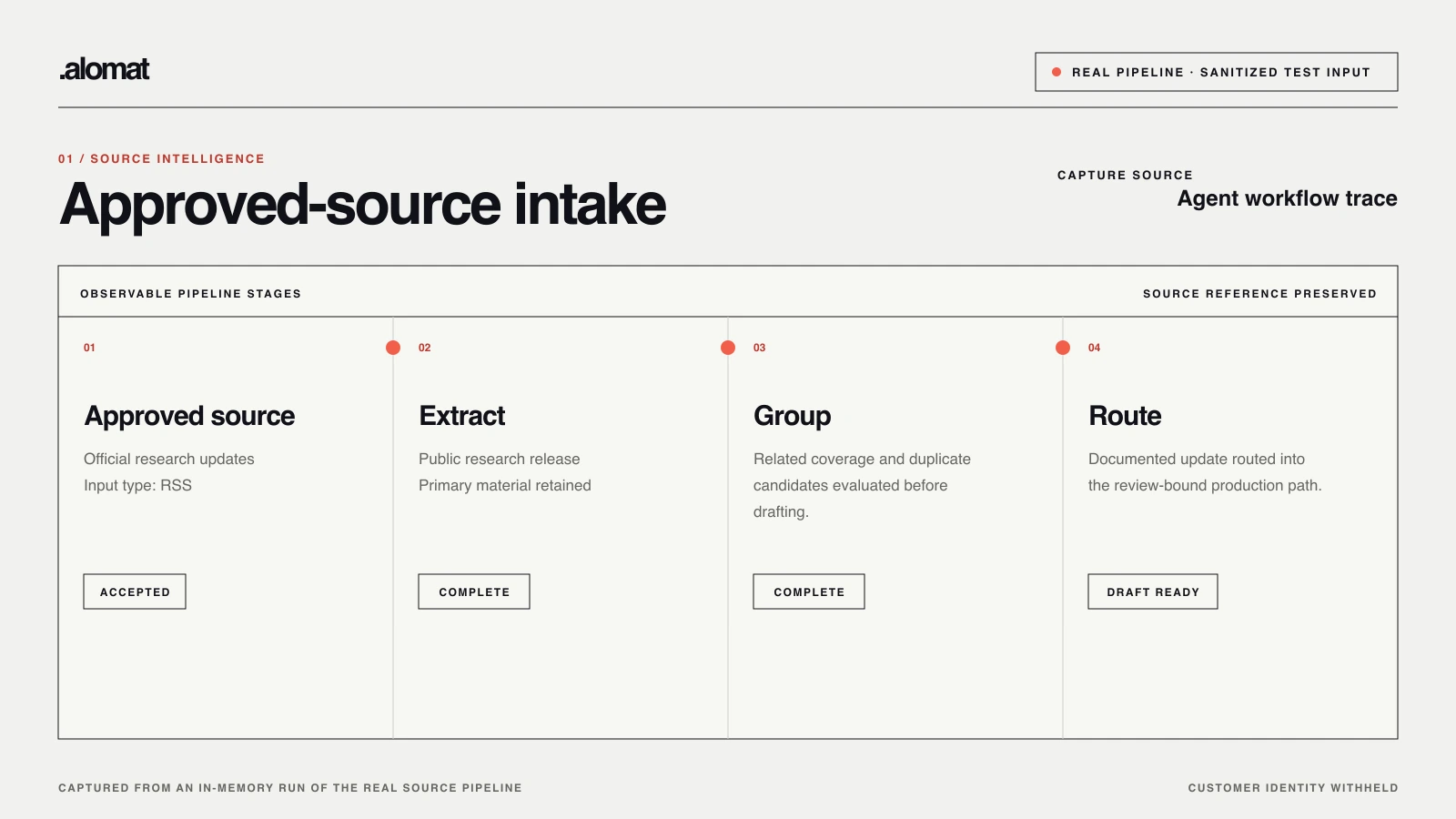
A sanitized trace captured from a real pipeline run, showing approved inputs entering monitoring and source processing before drafting begins.
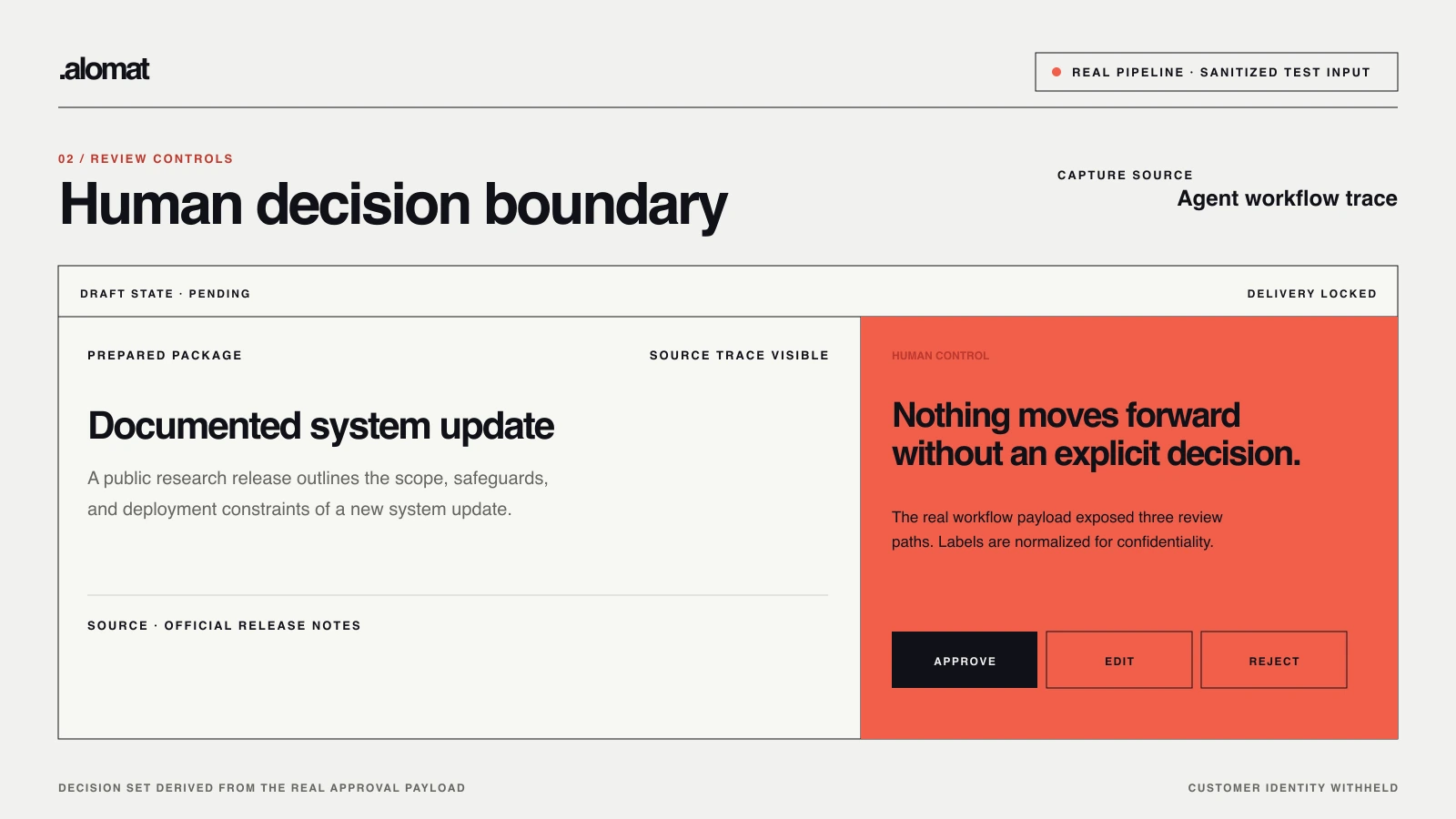
A sanitized trace captured from a real workflow run, where an editor receives explicit approve, edit, reject, and hard-stop decision paths.
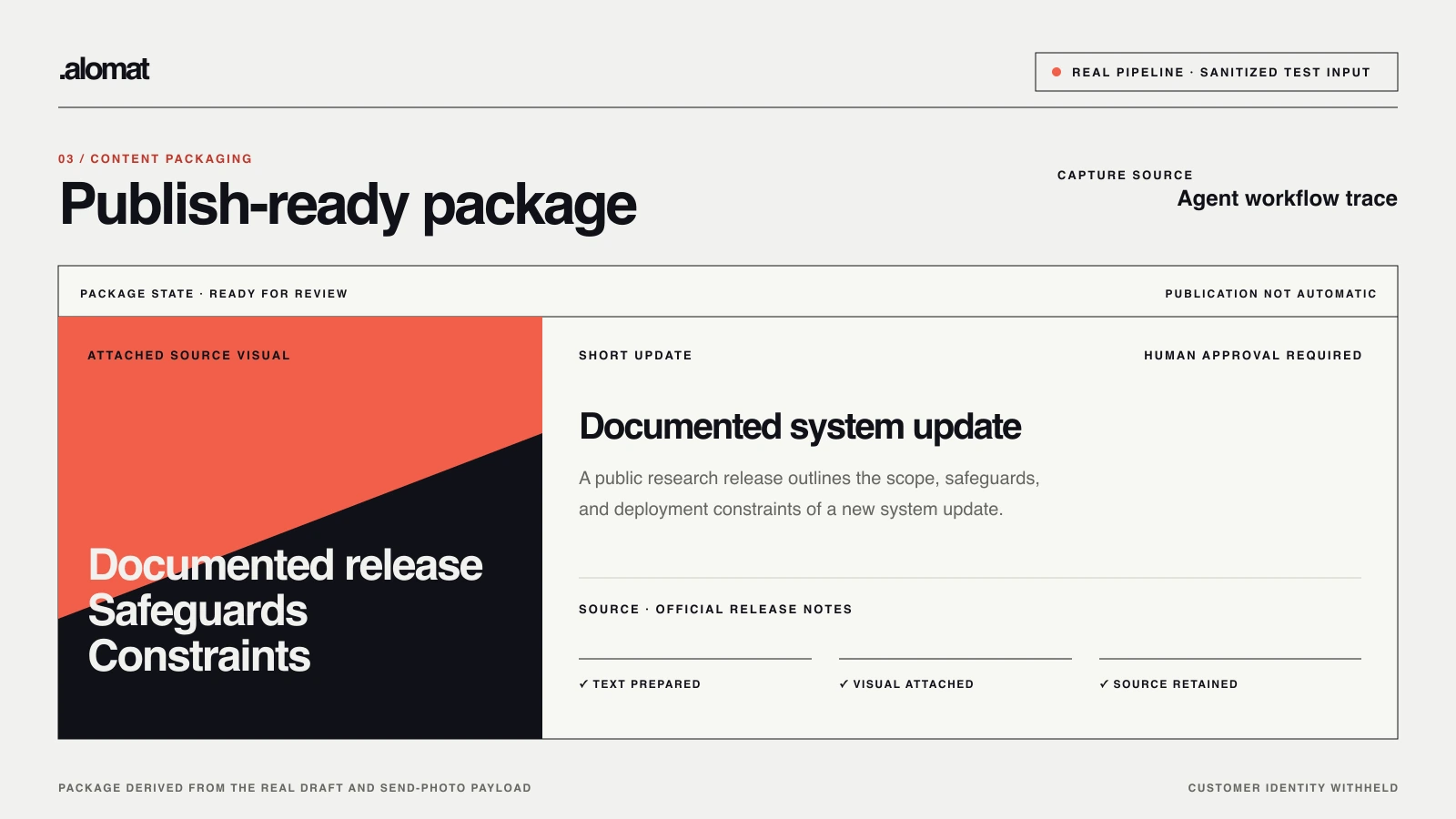
A sanitized trace captured from a real pipeline run, showing text, attached visual material, and source context held behind human approval.
05 / Verified outcome
What this deployment proves.
- Multiple approved-source inputs feed one observable workflow.
- Source references and related-story signals remain available before drafting.
- Archive-backed editorial context informs specialist production stages.
- Human approval, editing, rejection, and hard-stop paths precede delivery.
- Workflow state and review feedback remain part of the operating system.
Control boundary
The agents prepare. Editors decide.
The system preserves source boundaries, review state, explicit decision paths, escalation, and hard stops. It prepares accountable work for an editor rather than acting as an autonomous newsroom.
- Approved-source boundaries
- Visible source trace
- Human approval before delivery
- Edit, reject, and hard-stop paths
Start with one real workflow.